Infrastructure Consultant

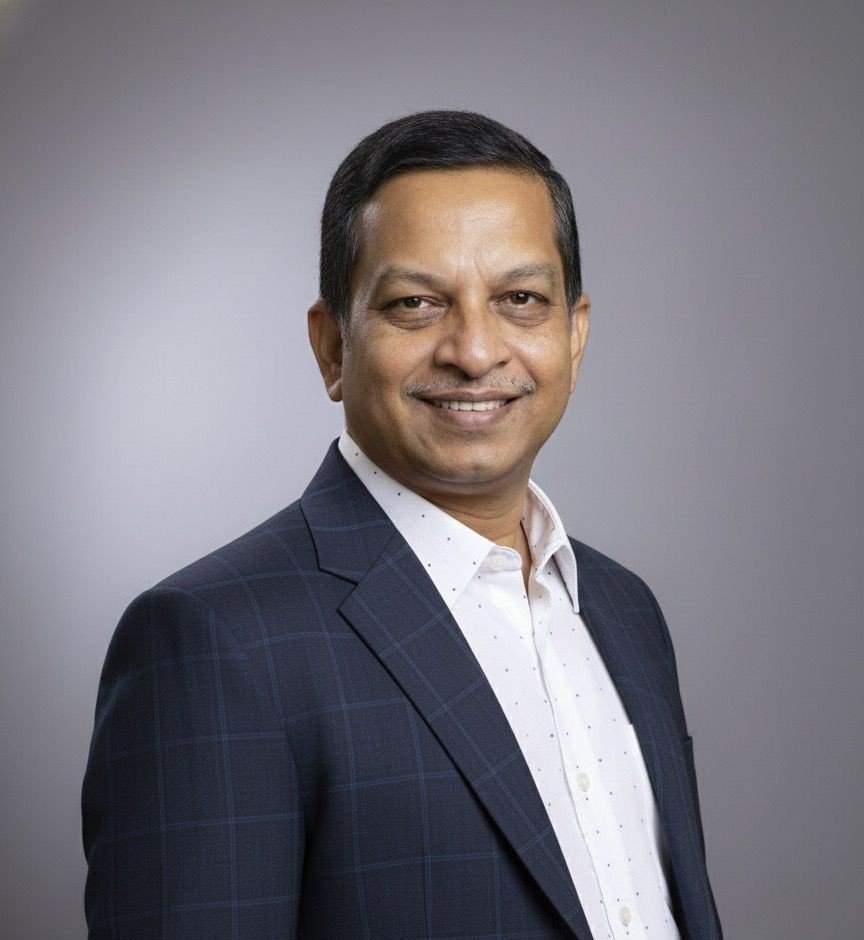
Md Shafiqul Islam Akand

Bangladesh's Leading Mega Infrastructure Consultant

Three decades delivering infrastructure that serves millions. Now advising on PPP structures that make complex projects bankable, buildable, and beneficial for Bangladesh.

Md Shafiqul Islam Akand
34+
Years Experience
$1B+
Projects Delivered
Best Project Director

Landmark Projects

Dhaka Bypass Expressway

Bangladesh's First Internationally-Structured Road PPP
2021 – Present Chief Operating Officer Design-Build-Finance-Operate-Maintain
$427M
Investment
48km
Expressway
25yr
Concession
68%
Complete

Project Significance

The Dhaka Bypass Expressway represents a watershed moment for Bangladesh's infrastructure sector. As the nation's first internationally-structured road PPP with full private financing, this project established the template for subsequent expressway developments and demonstrated that Bangladesh could successfully execute complex concession agreements meeting international standards.

The 48-kilometer four-lane expressway connects Joydebpur (Gazipur) to Madanpur (Narayanganj), effectively creating a bypass around Dhaka's congested core. The route intersects with national highways N1, N2, N3, and N4, reducing travel time from 2 hours to just 30 minutes while unlocking economic development across the northeastern corridor.

Role & Responsibilities

As Chief Operating Officer, I oversee all operational aspects of project delivery within a complex SPV structure combining Chinese state enterprises (Shudao Investment Group 60%, Sichuan Road & Bridge 30%) and local private sector (Shamim Enterprise 10%).

  • Contract Administration: Managing the 25-year concession agreement including design approvals, construction supervision, and compliance with performance standards
  • Stakeholder Coordination: Serving as primary liaison between government agencies (Roads & Highways Department, PPP Authority), international consortium members, and financing institutions
  • Land Acquisition Management: Addressing critical land transfer delays that have extended project timelines; of 312.48 acres required, securing the remaining ~95 acres through engagement with 13+ government departments
  • Quality Assurance: Ensuring construction meets specifications for Bangladesh's first fully access-controlled highway, including 12 bridges, 7 flyovers, 27 underpasses, and 8 interchanges
  • Financial Oversight: Managing project finances including China Development Bank offshore financing (Tk 1,614 crore), BIFFL onshore lending (Tk 1,075 crore), and viability gap funding (Tk 224 crore)

Technical Specifications

  • Route: National Highway N-105, 48 km from Joydebpur to Madanpur via Purbachal, Rupganj, and Bhulta
  • Design Standard: Four-lane divided expressway with service roads, Bangladesh's first fully access-controlled alignment
  • Major Structures: 12 bridges (including 1.5km Sitalakhya River Bridge), 7 flyovers, 27 underpasses, 8 interchanges
  • Funding Model: 94% private equity, 6% viability gap financing, establishing private led precedent
  • Operations Model: Electronic toll collection, 25-year DBFOM concession until May 2047

Current Status & Impact

As of late 2025, the project has achieved 68% physical completion with an 18-kilometer section (Bhogra-Purbachal) officially opened to traffic with toll operations in August 2025. The remaining 30 kilometers are targeted for completion by June 2026, though land acquisition challenges continue to affect timelines.

The project's impact extends beyond transportation efficiency. It has catalyzed real estate development in Purbachal New Town, improved connectivity to industrial zones in Gazipur and Narayanganj, and established operational precedents for toll collection, maintenance standards, and concession management that will inform Bangladesh's broader expressway network development.

Urban Governance & Infrastructure Improvement Project (Phase 3)

Performance-Based Municipal Development at National Scale
2014 – 2020 Project Director Asian Development Bank / OPEC Fund
$413M
Total Value
56
Pourashavas
7
Gov. Areas
28
Activities

Program Overview

UGIIP-3 represented the most comprehensive municipal development initiative in Bangladesh's history, covering 56 secondary towns across eight divisions. Co-financed by the Asian Development Bank ($312 million) and OPEC Fund for International Development ($101 million), the program pioneered performance-based infrastructure allocation that fundamentally transformed local government capacity.

The model has been replicated not only within Bangladesh by other development partners including the World Bank and JICA, but also exported to neighboring South Asian countries including India, Sri Lanka, and Nepal, establishing Bangladesh as a regional leader in urban local government innovation.

Strategic Approach

As Project Director, I led implementation of a groundbreaking governance framework that linked infrastructure investment to measurable municipal performance across seven governance areas with 28 distinct sub-activities. This incentivized pourashavas (municipalities) to improve service delivery, financial management, and participatory planning before receiving capital grants.

  • Performance Assessment: Developed scoring methodology evaluating urban planning, infrastructure maintenance, revenue mobilization, transparency, citizen participation, and environmental management
  • Capacity Building: Comprehensive training programs for municipal officials, engineers, and administrators covering financial management, procurement, safeguards, and infrastructure planning
  • Infrastructure Delivery: Managed construction of roads, drains, markets, bus terminals, community facilities, and environmental infrastructure across 56 towns with aggregate populations exceeding 5 million
  • Stakeholder Management: Coordinated with eight divisional offices, 56 pourashava mayors and councils, multiple national agencies, development partners, and civil society organizations

Key Achievements

  • Governance Transformation: Average municipal governance scores improved by 40% over project period, with participating pourashavas demonstrating sustained capacity enhancement
  • Infrastructure Scale: Delivered comprehensive infrastructure packages including roads, drainage systems, market facilities, solid waste management, and community infrastructure serving millions of urban residents
  • Financial Management: Improved municipal own-source revenue collection by average 35% through enhanced tax administration and service fee implementation
  • Model Replication: Performance-based allocation methodology adopted by subsequent World Bank LGSP, JICA projects, and regional initiatives in South Asia
  • Safeguards Excellence: Maintained full compliance with ADB environmental and social safeguards across 56 municipalities and hundreds of subprojects

Program Impact

UGIIP-3's greatest legacy extends beyond physical infrastructure. The program institutionalized participatory planning, transparent procurement, and performance-based budgeting within Bangladesh's urban local government system. Participating municipalities demonstrated sustained improvements in service delivery, financial sustainability, and citizen engagement years after program completion.

My role required managing a complex $413 million program across Bangladesh's diverse geographic and political landscape, coordinating multiple development partners with different requirements, and ensuring quality delivery despite capacity constraints in smaller municipalities, experience directly applicable to modern PPP advisory where stakeholder alignment and implementation capacity determine project success.
Urban Governance & Infrastructure Improvement Project (Phase 2)

Multi-Stakeholder Municipal Infrastructure Program
2008 – 2015 Project Director ADB / KFW / GIZ
$187M
Total Value
35
Towns
1,084km
Roads
195
Slum Upgrades

Program Scope

UGIIP-2 served as the proving ground for performance based municipal development in Bangladesh. Covering 35 secondary towns with multi-lateral financing from the Asian Development Bank, Germany's KfW (Kreditanstalt für Wiederaufbau), and GIZ (Deutsche Gesellschaft für Internationale Zusammenarbeit), the program required navigating different development partner priorities, procurement systems, and reporting requirements, invaluable experience for modern PPP structuring.

Infrastructure Delivered

As Project Director, I managed comprehensive infrastructure development across 35 municipalities with combined populations exceeding 3 million residents. The scale and diversity of interventions required sophisticated project management, quality control systems, and community engagement:

  • Roads & Drainage: 1,083.6 km of municipal roads, 130.8 km of drainage systems improving flood resilience and urban mobility
  • Public Lighting: 5,353 streetlights enhancing urban safety and commercial activity
  • Slum Improvement: 195 slum upgrading interventions providing paved pathways, drainage, water supply, and sanitation to vulnerable communities
  • Sanitation Infrastructure: 4,644 community toilets addressing critical public health needs in densely populated areas
  • Market Facilities: Construction and rehabilitation of municipal markets, bus terminals, and community centers

Multi-Partner Coordination

The program's complexity stemmed from coordinating three development partners with distinct operational frameworks. ADB's procurement guidelines, KfW's technical standards, and GIZ's capacity-building approach required creating unified implementation systems while maintaining each partner's specific requirements, directly analogous to modern PPP environments where government agencies, private consortiums, and lenders each demand different controls and reporting.

Successfully delivering $187 million across 35 towns with zero major safeguards violations, no significant cost overruns, and sustained infrastructure functionality demonstrates the institutional management capacity that differentiates successful PPP implementation from project failures.

Lessons Applied to PPP Practice

  • Stakeholder Alignment: Experience coordinating municipalities, national agencies, and international partners translates directly to PPP environments requiring government, private sector, and lender coordination
  • Performance Monitoring: Development of comprehensive M&E frameworks applicable to PPP key performance indicators and contract compliance
  • Community Engagement: Participatory planning and grievance mechanisms refined in UGIIP inform modern stakeholder management best practices
  • Financial Sustainability: Municipal revenue enhancement strategies provide foundation for PPP user-fee and operational viability analysis

Bridging Public Vision & Private Investment

The Unique Value

From LGED Project Director to COO of Bangladesh's first internationally structured road PPP. I understand both how government operates and what private investors require, a rare combination in Bangladesh's infrastructure sector.

$1B+ Multi-Stakeholder Projects

ADB, World Bank, OPEC Fund, KFW, Chinese consortiums, navigated diverse partner requirements

Proven PPP Implementation

Leading Bangladesh's $427M Dhaka Bypass from financial close to 68% completion

Award-Winning Delivery

Best Project Director (2011, 2013, 2015), recognized excellence in complex program management

Core Services

PPP Structuring & Advisory

Risk allocation, financial modeling, concession agreements, and bankability analysis

Project Implementation

Owner's Engineer, contract management, stakeholder coordination, delivery oversight

Development Bank Relations

Technical advisory, capacity building, transaction support for ADB, World Bank, IDB

Urban Infrastructure

Roads, expressways, municipal services, integrated urban development

Education & Professional Development

2001 - 2002

Cardiff University / Prifysgol Caerdydd

Master's degree, City/Urban, Community and Regional Planning
Cardiff, United Kingdom
1984 - 1987

Chittagong University of Engineering & Technology (CUET)

Bachelor of Science - Civil Engineering
Chittagong, Bangladesh

Career Journey

Jan 2021 - Present • 5 years

Chief Operating Officer

Dhaka Bypass Expressway Development Company Limited

Leading Bangladesh's first internationally-structured road PPP ($427M) from construction through operational readiness. Managing consortium partnership (Shudao Investment 60%, Sichuan Road & Bridge 30%, Shamim Enterprise 10%), stakeholder coordination, and contract administration for 48km expressway.

Jan 2019 - Jan 2022 • 3 years 1 month

Additional Chief Engineer

Local Government Engineering Department (LGED)

Senior leadership role overseeing urban infrastructure development nationwide. Presented concept paper at national workshop on "My Village My Town" initiative. Took voluntary retirement in 2022 (under lien from Jan 2021).

Apr 2017 - Jan 2019 • 1 year 10 months

Superintending Engineer (Urban Management)

Local Government Engineering Department (LGED)

Directed urban infrastructure programs and municipal development initiatives across Bangladesh.

Jan 2015 - Apr 2017 • 2 years 4 months

Project Director - UGIIP-3

Local Government Engineering Department (LGED)

Led Urban Governance & Infrastructure Improvement Project Phase 3 ($413M) covering 56 pourashavas. Implemented performance-based allocation model adopted regionally. Awarded Best Project Director 2015.

Feb 2011 - Jun 2015 • 4 years 5 months

Project Director - UGIIP-2

Local Government Engineering Department (LGED)

Managed $187M multi-donor program (ADB, KFW, GIZ) across 35 municipalities. Delivered 1,084km roads, 195 slum upgrades, 4,644 community toilets. Success rate: 99.1%. Awarded Best Project Director 2011, 2013.

2001 - 2011 • 10 years

Executive Engineer

Local Government Engineering Department (LGED)

District-level infrastructure delivery in Sherpur, Comilla, and Mymensingh districts.

Sep 1988 - Jul 2001 • 12 years 11 months

Assistant Engineer

Local Government Engineering Department (LGED)

Foundation engineering role following graduation from CUET.

Awards & Recognition

🏆
2015

Best Project Director

Local Government Engineering Department (LGED)

Recognition for exemplary leadership of UGIIP-3 ($413M) covering 56 municipalities
🏆
2013

Best Project Director

Local Government Engineering Department (LGED)

Outstanding performance in UGIIP-2 implementation and municipal infrastructure delivery
🏆
2011

Best Project Director

Local Government Engineering Department (LGED)

First recognition for excellence in multi-donor project management and stakeholder coordination

Three-time recipient of LGED's highest project management honor, a testament to sustained excellence across $600M+ in complex infrastructure programs.

Publications & Media

Bangladesh: Developing governance and infrastructure in urban slums

OPEC Fund, 2016

Direct quotes from Shafiqul Islam Akand as UGIIP-3 Project Director on urban slum governance and infrastructure delivery.

Read Article →

My Village My Town: Extension of Urban Amenities to Each Village

Bangladesh Post, 2019

"Additional Chief Engineer of LGED Engr. Md Shafiqul Islam Akand presented the concept paper."

Read Article →

Digitalise land records to boost PPP projects

The Daily Star, March 13, 2023

"Shafiqul Islam Akand, chief operating officer of the Dhaka Bypass Expressway Development Company Limited, said the PPP market in Bangladesh is more developed compared to neighbouring countries."

Read Article →

Dhaka Bypass Expressway to be operational in Jul 2025

The Financial Express, 2024

"The event was also attended by...Md Shafiqul Islam Akand, COO of Dhaka Bypass Expressway Development Company Limited."

Read Article →

Dhaka Bypass Expressway to be operational from July 2025

Daily Messenger, 2024

"Md Shafiqul Islam Akand COO of Dhaka Bypass Expressway Development Company Limited."

Read Article →

Implement national housing policy

The Daily Star, November 24, 2017

"Shafiqul Islam Akand, superintending engineer (urban management) of Local Government Engineering Department" presented papers at the Urban Thinkers Campaign.

Read Article →